

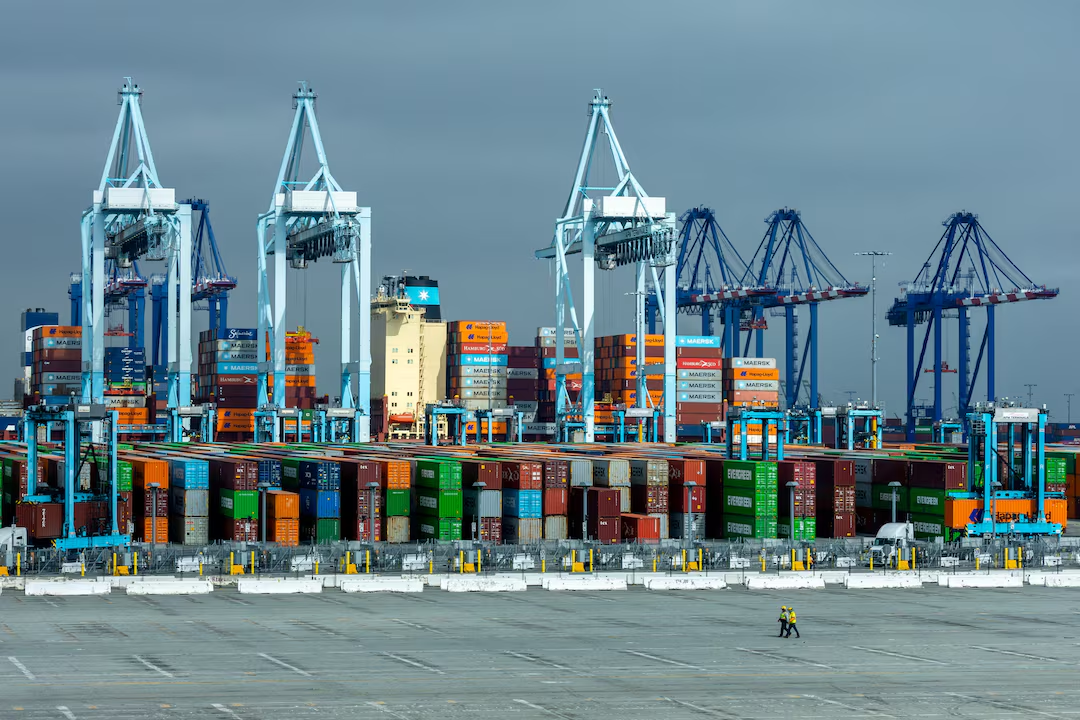
The U.S. goods trade deficit widened to a 14-month high in May as imports surged and exports declined, according to the Commerce Department. Businesses increased imports to avoid possible shortages and higher costs linked to the recent conflict in the Middle East.
The goods trade gap rose 27.4% to $105.8 billion, much higher than economists had expected. Imports climbed 3.6% to $313.4 billion, led by strong demand for automobiles, consumer goods, industrial supplies, and products used in artificial intelligence (AI) development.
Meanwhile, goods exports fell 5.4% to $207.7 billion, with sharp declines in exports of consumer goods, industrial supplies, and capital equipment.
Although oil prices have fallen and shipping through the Strait of Hormuz has improved following a preliminary peace agreement between the United States and Iran, economists believe the trade deficit may remain high because the AI industry depends heavily on imported equipment.
Analysts warned that rising imports could slow U.S. economic growth in the second quarter by reducing the contribution of trade to the country’s gross domestic product (GDP). Despite these concerns, the U.S. economy is still expected to grow at an annual rate of around 2.5% in the second quarter.