

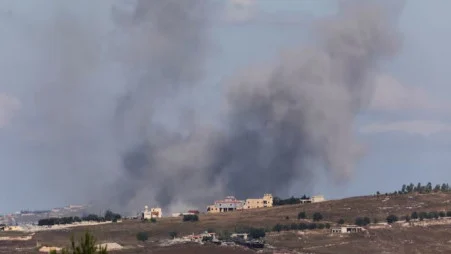
Fighting between Israel and Hezbollah intensified in southern Lebanon on Friday, raising concerns about the future of the recently signed U.S.-Iran interim peace agreement.
According to Lebanese health officials, at least 18 people were killed and 33 others injured in Israeli airstrikes across 11 towns in southern Lebanon. In one of the deadliest incidents, seven people were reportedly killed in the village of Harouf, while many others were believed trapped under rubble.
At the same time, the Israeli military confirmed that four of its soldiers were killed during clashes with Hezbollah fighters. Israeli Prime Minister Benjamin Netanyahu vowed to make Hezbollah pay a “very heavy price” for the attack.
The renewed violence has placed pressure on the U.S.-Iran agreement, which calls for an immediate and permanent end to military operations across the region, including Lebanon. While fighting had decreased earlier in the week, hostilities have since escalated.
Israeli Defence Minister Israel Katz said Israeli forces would remain in southern Lebanon and continue holding territory. He stated that residents displaced from the occupied security zone would not be allowed to return, highlighting Israel’s determination to maintain its military presence.
Hezbollah denied violating the ceasefire and accused Israel of repeatedly breaking the agreement through airstrikes, ground operations, and attacks on civilians and infrastructure.
As fighting intensified, thousands of residents reportedly fled northern areas from the southern districts of Tyre and Bint Jbeil. Heavy clashes were reported near the strategically important Ali al-Taher hill, where Hezbollah claimed it destroyed several Israeli tanks and targeted advancing troops.
Since the conflict expanded in March, Lebanon’s Health Ministry says nearly 4,000 people have been killed by Israeli attacks, including women, children, and medical workers. Israel reports that at least 32 soldiers and four civilians have been killed in Hezbollah attacks.
Meanwhile, some Israeli political leaders strongly criticized the U.S.-Iran agreement, arguing it failed to address concerns about Iran’s nuclear program. Far-right ministers called for a tougher military response following the deaths of the Israeli soldiers.
The latest escalation highlights the fragile nature of current peace efforts and raises fears that the conflict could further destabilize the region despite ongoing diplomatic initiatives.