
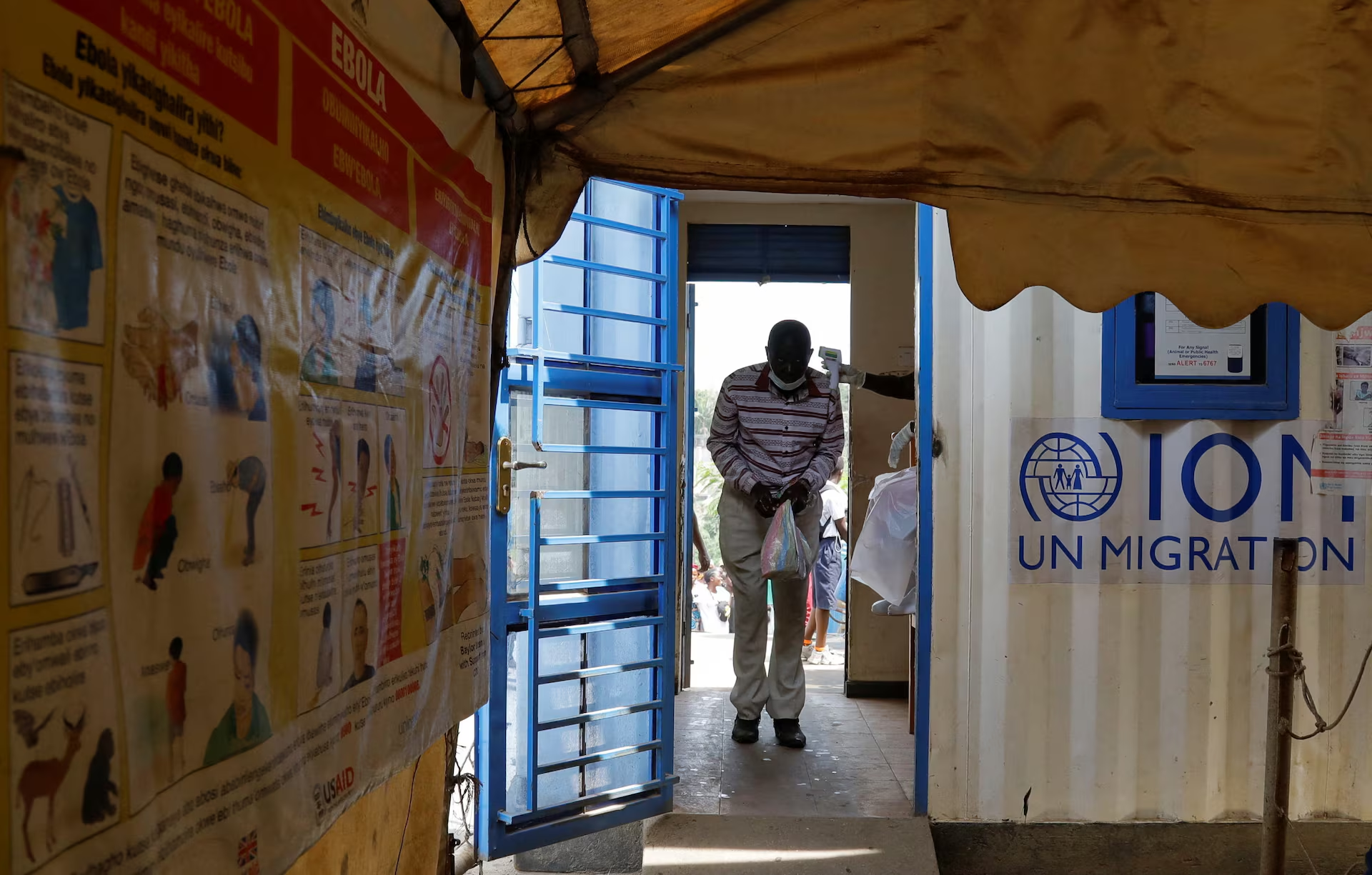
The World Health Organization (WHO) has selected several experimental treatments and vaccines to be tested during the ongoing Bundibugyo Ebola outbreak in the Democratic Republic of the Congo and Uganda.
WHO said three treatments should be given priority in clinical trials: Mapp Biopharmaceutical’s MBP134, Regeneron’s maftivimab, and Gilead Sciences’ antiviral drug remdesivir. These medicines will be studied to see how effective they are against the Bundibugyo strain of Ebola, for which there are currently no approved treatments or vaccines.
Regeneron said supplies of maftivimab are already available in Congo and could be used immediately if needed.
For prevention, WHO also highlighted Gilead’s experimental oral drug obeldesivir for people who may have been exposed to the virus. However, experts said its success will depend on strong contact tracing.
Among vaccine candidates, WHO said the single-dose rVSV Bundibugyo vaccine being developed by the International AIDS Vaccine Initiative appears most promising, but it may not be ready for testing for another seven to nine months.
Another vaccine, ChAdOx1 Bundibugyo, developed by Oxford University and the Serum Institute of India, could be ready for trials within two to three months, although more animal testing is needed first.
WHO also reviewed Merck’s Ervebo vaccine, the only approved Ebola vaccine, but said there is not enough evidence yet to use it widely against the Bundibugyo strain outside research studies.
The agency is now working with health authorities in Congo and Uganda, along with Africa CDC and other partners, to organize clinical trials under strict ethical guidelines.