

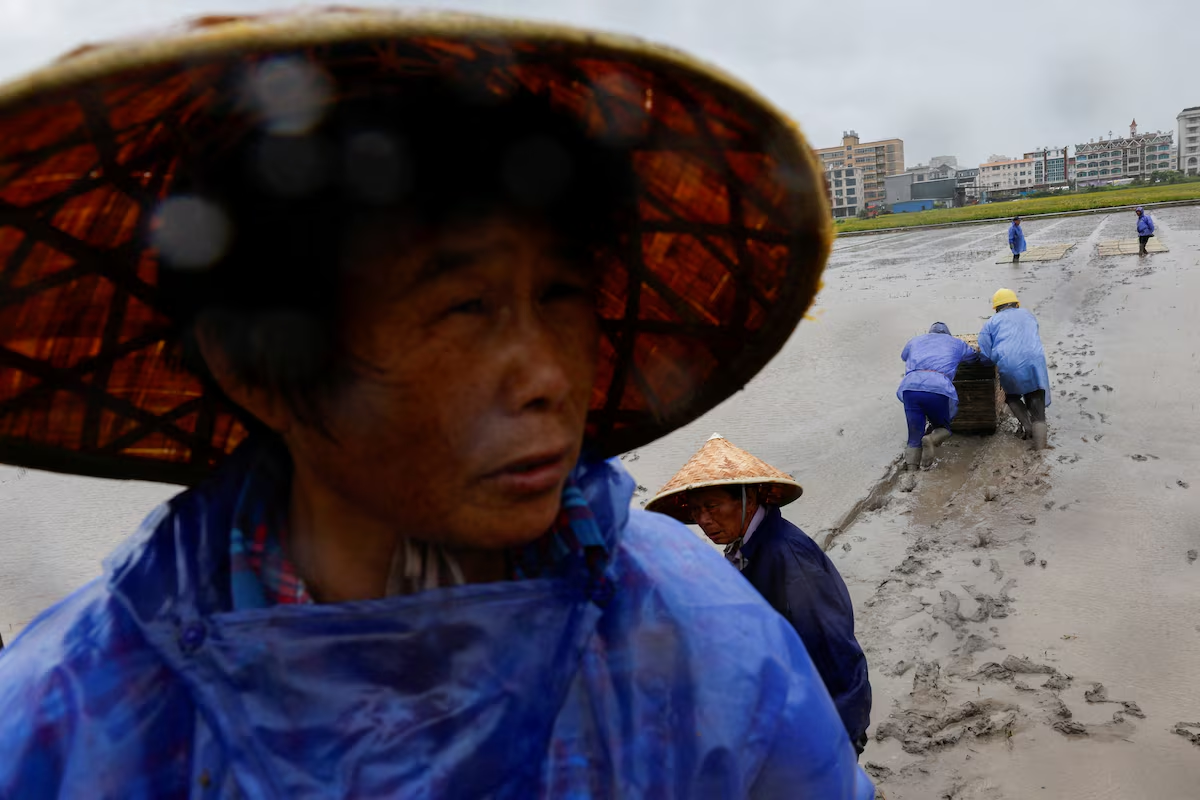
Typhoon Bavi moved closer to eastern China on Saturday, forcing authorities to evacuate more than 600,000 people before the storm’s expected landfall near the city of Wenzhou. Earlier, the typhoon brought heavy rain and strong winds to Japan’s southern Sakishima islands and passed close to northern Taiwan.
Although Bavi has weakened while moving over cooler waters, weather officials warned that it still carries large amounts of rain and remains dangerous. The storm is expected to reach Wenzhou, a city of about 10 million people, early on Sunday.
Chinese state media reported that over 500,000 people were evacuated in Zhejiang province, where Wenzhou is located, while more than 100,000 others were moved to safety in neighbouring Fujian province.
Residents prepared for the storm by buying groceries and storing drinking water. Many said they trusted the government’s emergency measures and did not feel the need to panic.
Taiwan also took precautions by evacuating more than 14,000 people from mountainous areas. Nearly 920 international flights and all domestic flights were cancelled, while most schools and offices were closed. High-speed rail services continued with reduced operations.
Despite strong winds and heavy rain, Taiwan reported no deaths from the typhoon. However, 87 people were injured, mostly due to falls or being hit by flying objects.
In the Philippines, heavy rains linked to Typhoon Bavi strengthened the southwest monsoon, leading to floods and landslides that killed 17 people.
As the storm approaches China, authorities continue to monitor the situation and urge residents to remain alert and follow safety instructions.