

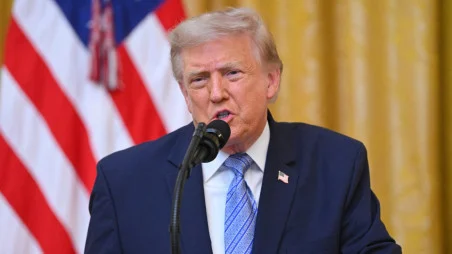
US President Donald Trump has once again questioned the integrity of US elections, releasing declassified intelligence documents that he says reveal election fraud and foreign interference. However, many of his claims conflict with previous intelligence findings and independent studies.
Here are five key claims Trump made:
- China influenced US elections: Trump alleged that China tried to help Democrats in recent elections and collected US voter data. However, a 2021 US intelligence assessment concluded that China considered influencing the 2020 election but decided not to do so, and the voter information it collected was publicly available.
2. Venezuela could manipulate voting machines: Trump cited CIA documents about Venezuela’s election system to argue that electronic voting machines can be hacked. While the documents said Venezuela had such capabilities, there is no evidence that US voting machines were manipulated in any election.
3.Non-citizens are registered to vote: Trump claimed the Department of Homeland Security found around 278,000 non-US citizens registered to vote. Independent research, however, has found that non-citizen voting is extremely rare, and experts warn that large-scale voter roll purges could remove eligible voters.
4.Fraud in Michigan voter registrations: Trump revived claims about fraudulent voter registration applications in Muskegon, Michigan. Authorities said suspicious registrations were identified and removed before Election Day, no fraudulent votes were cast, and no charges were filed.
5.California’s slow vote counting raised concerns: Trump questioned California’s lengthy vote-counting process and suggested it indicated fraud. State officials said the delay was mainly due to the high number of mail-in ballots and stressed that audits and court reviews have found no evidence of widespread voter fraud.